


Introduction
1.1. Why Newborn Cries Feel Like a Mystery
The early weeks with a newborn are a beautiful, though often challenging, transition for many families. One of the most confusing moments often involves trying to decipher why your baby is crying, especially when their cries seem to have no cause. These early experiences can make newborn cries seem like a complex puzzle that parents are always trying to solve with very few clues.
Crying is your newborn’s first and most important form of communication. It is how they express hunger, tiredness, discomfort, overstimulation, or the simple need for closeness and reassurance. This is often the first language parents learn from their babies, long before the first smile or coo appears.
However, not all crying sounds the same or carry the same meaning. Some cries reflect basic needs that can be soothed quickly, while others may be linked to digestive discomfort, developmental leaps, or potential signs of illness that require closer attention. Understanding these differences takes time and confidence.
For new parents, recognising and interpreting these cues can feel overwhelming at first. With patience, observation, and guidance, you will gradually begin to notice patterns and respond in ways that help your baby feel calm and supported. Learning to interpret newborn cries is a skill that develops naturally with experience.
In this guide, we will explore the differences between cries caused by colic, gas, and growth spurts, how to read communication cues beyond the crying itself, and how professional help, such as getting support from a confinement nanny in Singapore, can make the early weeks far more manageable for both parents and babies.
Key Takeaways
- Understanding the different reasons babies cry helps parents to respond more confidently and effectively.
- Observing body language, timing, and recent activities provides valuable clues beyond the sound of the cry itself.
- Many common causes of crying, such as digestive discomfort or growth-related fussiness, are temporary phases.
- Additional support from trained caregivers can ease stress for new parents and create a calmer, more reassuring environment during the early weeks.
Part 2: Understanding Newborn Cries

2.1. The Science of Crying: What Is Happening in Your Baby’s Body
Crying is a natural survival mechanism and one of the earliest behaviours babies use to interact with the world. Since infants cannot speak, newborns’ cries are their primary way of signalling their needs and drawing a caregiver’s attention so that they can receive comfort, food, or help regulating their environment.
Physiologically, crying supports several important functions. It helps to regulate breathing rhythms, stimulates lung development, and prompts caregivers to respond quickly. It also allows babies to release built-up tension, which is common in the early weeks as they adjust to life outside the womb. These responses are part of a healthy developmental process.
The type of cry a baby produces is often influenced by what is happening internally. Hunger, discomfort, over-stimulation, or rapid developmental changes all contribute to the variations heard in newborn cries. Understanding these internal triggers helps parents respond more accurately to their baby’s needs.
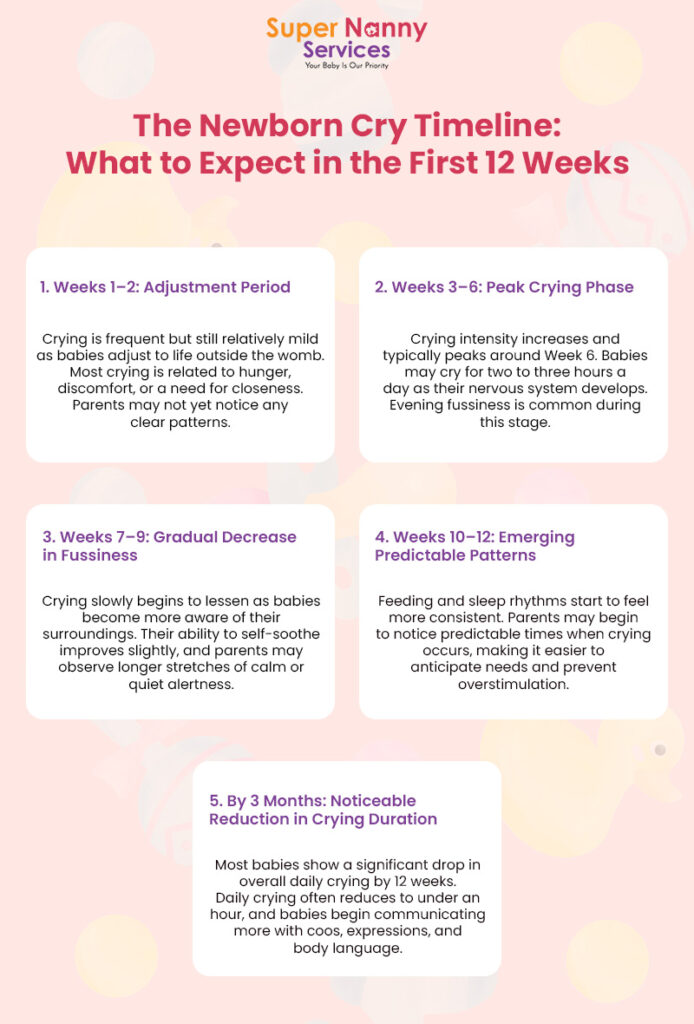
As babies grow, their crying patterns shift along with their development. A two-week-old newborn may cry more reflexively, while a two-month-old is more likely to produce cries that sound expressive and intentional. These changes reflect their increasing awareness and maturing nervous system.
2.2. Types of Newborn Cries and What They Mean
Hunger Cries
Newborn cries related to hunger are rhythmic and repetitive, and gradually intensify if the issue is not being addressed. They are often accompanied by rooting, sucking motions, or attempts to bring their hands toward their mouth. Feeding usually soothes these cries quickly. Many parents learn to distinguish hunger vs discomfort cries over time by observing how consistently feeding brings relief. Mothers who experience challenges with milk flow or engorgement sometimes explore lactation massage in Singapore for additional support. Responding to early hunger cues can prevent the escalation of distress.
Discomfort or Nappy Cries
These newborn cries often have a whiny or fussy tone and may be accompanied by squirming or wriggling. Triggers include wet nappies, tight clothing, or temperature changes. Once the discomfort is resolved, the crying typically stops almost immediately.
Gas or Digestive Discomfort Cries
Gas-related cries are often high-pitched and intense, sometimes occurring in waves. Babies may arch their backs, clench their fists, or pull their knees toward their tummy. These signs are common in newborns with immature digestive systems or trapped gas in their intestines. Gentle tummy massage, frequent burping, and maintaining an upright feeding position can help relieve discomfort.
Colic Cries
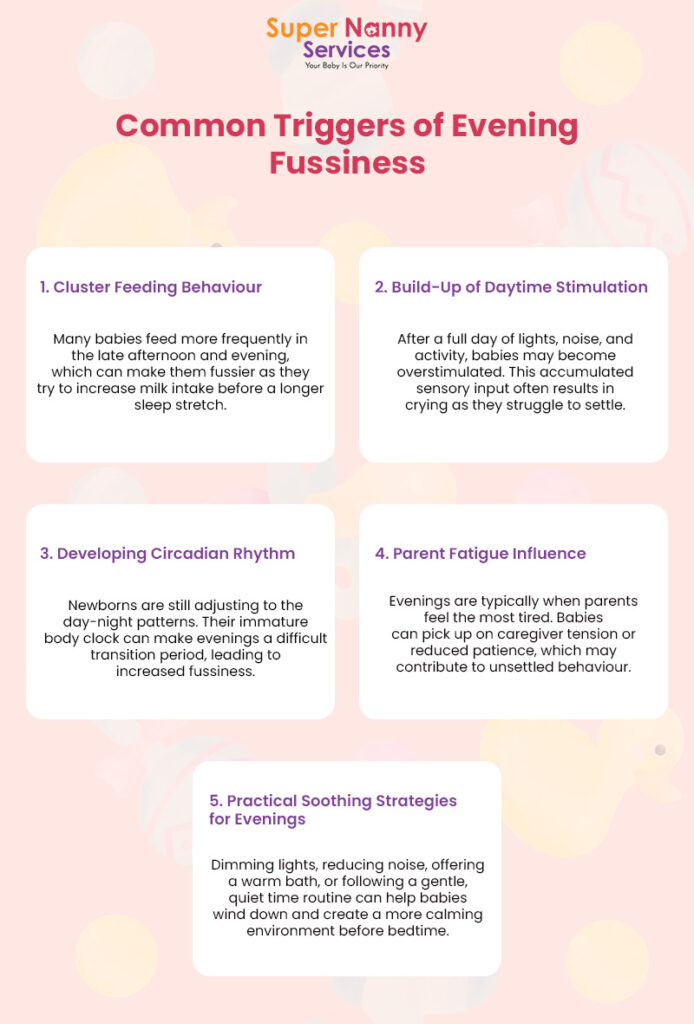
Colic involves loud, intense, and inconsolable newborn cries that last for extended periods, commonly more than three hours a day on several days of the week. These episodes often occur at a predictable time, usually in the evenings. Although the exact cause is not fully understood, gut immaturity and overstimulation are possible contributors. Understanding the symptoms of colic in an infant can help parents recognise these episodes earlier. Soothing strategies include white noise, swaddling, rhythmic motion, and creating a calm environment.
Growth Spurt or Developmental Cries
During growth spurts, newborns may suddenly cry more frequently, often accompanied by increased feeding and clinginess. These episodes typically last between a few days and a week and are linked to rapid physical or neurological development. Extra feeding sessions, comfort, and patience can help babies through this temporary phase.
Over-stimulation or Fatigue Cries
These newborn cries often escalate in a whiny pattern and may include signs such as turning the head away, rubbing the eyes, or arching the back. Babies may resist sleep even when overtired. Dimming the lights, reducing noise, and using gentle rocking can help them settle more easily.
Pain or Illness Cries
Pain-related newborn cries are sharp, sudden, and noticeably different from typical patterns. They may be accompanied by symptoms such as a high temperature, lethargy, refusal to feed, or changes in breathing. When these signs appear, it is important to contact a doctor immediately.
2.3. Reading the Whole Picture: Beyond the Cry Itself
Crying is only one part of how infants communicate. Babies convey additional messages through body movements, facial expressions, and behavioural patterns, and these cues can make newborn cries easier to interpret.
Here are some cues to pay attention to:
- Body Cues: An arched back may suggest pain, clenched fists can indicate tension, and rooting is a common hunger signal.
- Time of Day: Evening fussiness may indicate colic or overstimulation.
- Duration and Frequency: A sudden increase in crying may signal a growth spurt.
- Recent Events: Consider whether the baby was recently fed, changed, or exposed to stimulating activities.
Experienced caregivers often combine these signals to gain a more holistic understanding of babies. Confinement nannies, for instance, are skilled at interpreting these behaviours quickly, which can be especially helpful for first-time parents who are still learning their newborn’s unique cries and patterns.
Part 3: Responding to Newborn Cries with Confidence
Many parents feel anxious or uncertain when trying to soothe a crying baby, and it helps to remember that these feelings are a natural part of adjusting to life with a newborn.
3.1. Step-by-Step Guide: How to Soothe Based on the Cry
Newborns express their needs in different ways, and recognising these patterns helps parents respond in a more focused and effective manner. While earlier sections explain what different types of cries may indicate, the steps below offer practical ways to soothe your baby based on the cues you observe. These approaches give new parents in Singapore simple, calming strategies they can apply during everyday moments of fussiness.
Step 1: Recognising and Responding to Hunger Cues
Begin by checking if your baby is hungry. Offer a feed promptly, as hunger is one of the most common triggers for newborn cries. If the baby refuses to feed, observe their cues again to determine whether the issue may be related to discomfort, fatigue, or overstimulation.
Step 2: Easing Gas or Physical Discomfort
If the cry sounds strained or high-pitched, burp the baby frequently, especially after feeding. Hold them upright for a few minutes and try a gentle tummy massage to ease trapped wind. These steps help relieve digestive discomfort, which often contributes to unsettled behaviour in the early months.
Step 3: Calming Colic Episodes
For babies showing signs of colic, swaddling can create a sense of security. Gentle rocking helps regulate their nervous system, and white noise can mimic the comforting sounds they heard in the womb. Maintain a calm and predictable environment to help shorten the duration of colic-related crying.
Step 4: Settling Fatigue or Overstimulation
Look for early signs of tiredness, such as rubbing eyes or turning the head away. Create a sleep-friendly space with lower lights and minimal noise. Consistent soothing methods help babies settle faster and reduce overtired crying later in the day.
Step 5: Supporting Your Baby Through Growth Spurts
Growth spurts often bring sudden increases in clinginess and feeding demands. Feed on demand, offer more cuddles, and expect more night waking. This phase is temporary and usually resolves once the developmental leap stabilises.
Step 6: Taking Action for Pain or Illness
Sharp, unusual, or persistent crying, accompanied by fever, lethargy, or refusal to feed, may indicate an illness. If you notice these signs, contact your paediatrician for assessment. Early medical attention ensures your baby receives the care they need.
A key reminder for parents is to stay calm throughout the process. Babies are sensitive to their caregiver’s emotions, and a steady presence helps them feel secure even when they are distressed. However, when feeling overwhelmed, remember that professional guidance can provide immediate, reassuring support.
3.2. How Confinement Nannies Help Decode Cues
Super Nanny Services plays a meaningful role in supporting families during the postnatal period in Singapore. Their confinement nannies are professionally trained to recognise subtle patterns in cries, body language, and feeding behaviour. This skill allows them to distinguish quickly between hunger, trapped wind, overstimulation, or early signs of illness, which is especially reassuring for first-time parents who are still learning to recognise these newborn cues.
Many parents also find it helpful to complement this guidance with breastfeeding classes, which further support feeding confidence during the early weeks.
What sets Super Nanny Services apart is its focus on the well-being of both mother and baby. Nannies provide round-the-clock guidance on soothing techniques for newborns, structured feeding routines, and sleep-friendly habits that support a smoother recovery and a calmer household. They also teach parents how to interpret newborn communication cues, which helps families feel more confident long after the confinement period ends.
The agency is committed to offering quality caregiving at reasonable rates, ensuring that families receive dependable support throughout their confinement journey. Their blend of trained expertise, cultural understanding, and practical daily help creates a smoother and more reassuring experience for parents who want reliable guidance during the early weeks.
Questions You Might Ask
1. How long is too long for a baby to cry?
Babies commonly cry two to three hours a day in the first months. If your baby cries for more than three hours a day on at least three days of the week and remains difficult to console, speak to your paediatrician. This may indicate colic or, in some cases, an underlying medical concern.
2. Can letting my baby cry harm them?
Newborns cry to express their needs, not to seek attention. Leaving a newborn to cry for long periods can increase stress for both parent and baby. Responding consistently helps build trust and supports emotional development. Brief, supervised fussing may be part of sleep learning later on, but not during the newborn stage.
3. Will I ever understand my baby’s cries?
Yes. Over time, most parents begin to recognise differences in pitch, intensity, and rhythm that signal hunger, fatigue, or discomfort. Patterns become clearer with experience, and guidance from a confinement nanny can speed up the learning process during the early weeks.
4. What if my baby cries even after trying everything?
If feeding, burping, changing, and soothing do not help, pause and assess calmly. Look for signs of pain such as fever, rash, or vomiting, and consider whether the environment may be overstimulating. Growth spurts can also cause temporary fussiness. If the crying seems unusual or persistent, consult a doctor.
5. How can a confinement nanny help me feel more confident?
A stay-in nanny in Singapore provides hands-on care while teaching parents how to interpret newborn cues with greater accuracy. They offer support with feeding, settling techniques, and sleep routines, allowing mothers to get more rest and creating a calmer environment for the whole family.
Conclusion

Crying is your newborn’s first language and one of the most important ways they communicate with the world around them. It signals everything from hunger and tiredness to the need for comfort, relief from gas, or reassurance during a growth spurt.
Learning to interpret your baby’s cues takes time, and every child has a rhythm that parents gradually learn to recognise. With patience and careful observation, you will grow more confident in understanding what your baby needs and how best to respond.
Most crying is a normal part of early development. Colic usually improves with age, and growth spurts typically subside once the body has adjusted to its new size. Each soothing moment strengthens the bond between you and your child. These early weeks are filled with learning, and it is natural to feel unsure at times.
If you ever feel overwhelmed, remember that many parents in Singapore seek additional support during the postpartum period. Access to confinement care services can offer the reassurance and guidance that families need, helping both mother and baby feel more settled during the early weeks of recovery.
To receive dedicated and professional support during your confinement period, consider engaging Super Nanny Services. Their experienced team can guide you through the early weeks, support your recovery, and help you understand your baby’s cues with confidence. Reach out today to begin your postpartum journey with calmer routines, smoother days, and reliable support from a trusted confinement partner.
